Created by a homeschool mom who's been where you are — and knows what it takes to teach a struggling child to read.
Teach reading effectively without the tears
The three stages of Art of Reading will take your child from zero reading at the start of Kindergarten to competent and independent reader by the end of Grade 1
Learn more about Art of Reading
- Systematic & Thorough
- Easy to Use
- Everything in One book
- Open & Go
- One concept at a time
- Readers without pictures
- Mastery with Spiral Review
- Trackable results
- Actually fun
The Art of Reading is a systematic, mastery-based phonics program.
Each new concept is introduced one at a time through a short, focused daily lesson, with spiral review included in every lesson to maintain steady forward progress.
Is this the right phonics program for me and my child?
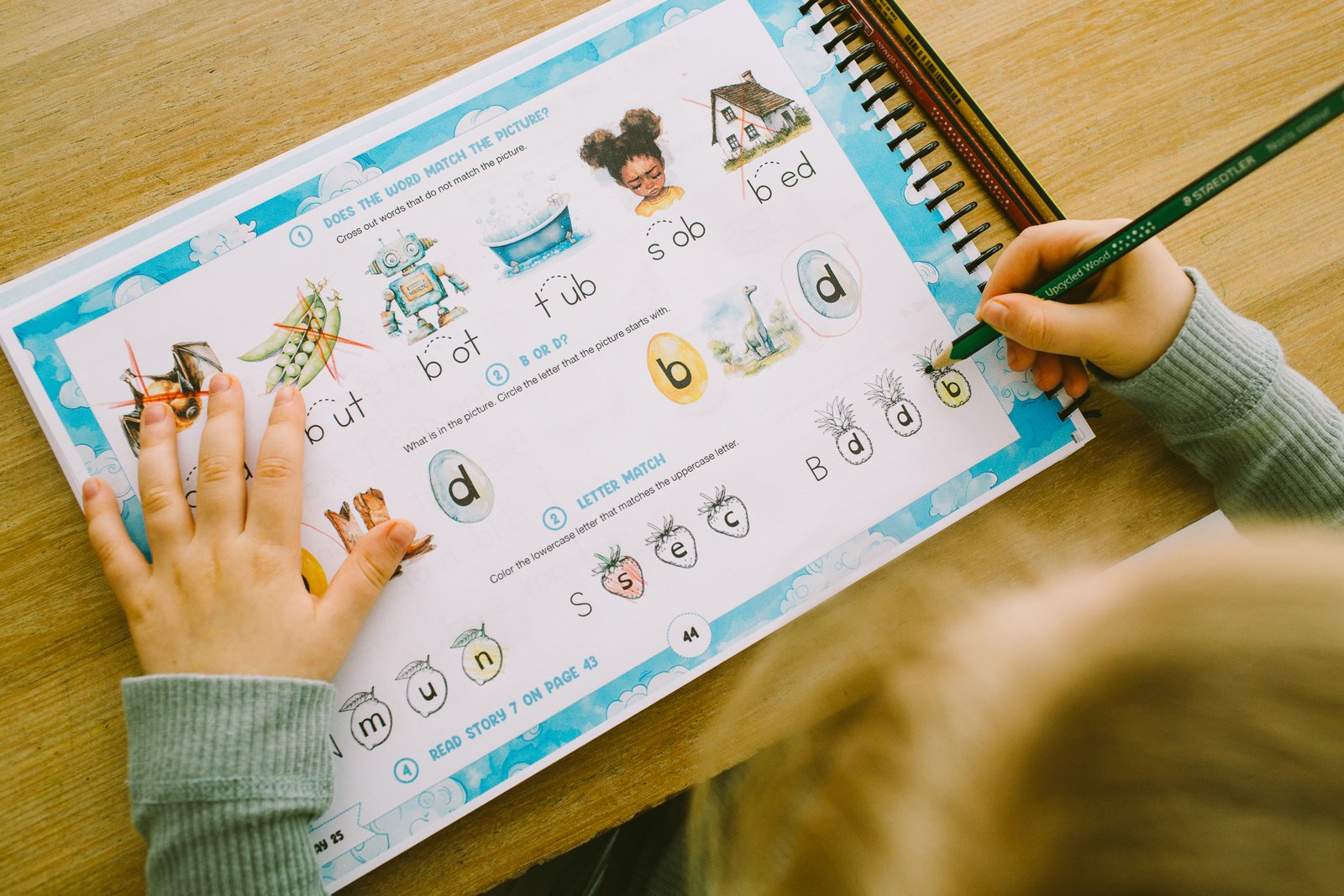
Do you need an easy to use, open & go book? Where the parent guide, activities, and readers are all in one place?
So you won’t be juggling 1,000 bits and pieces.
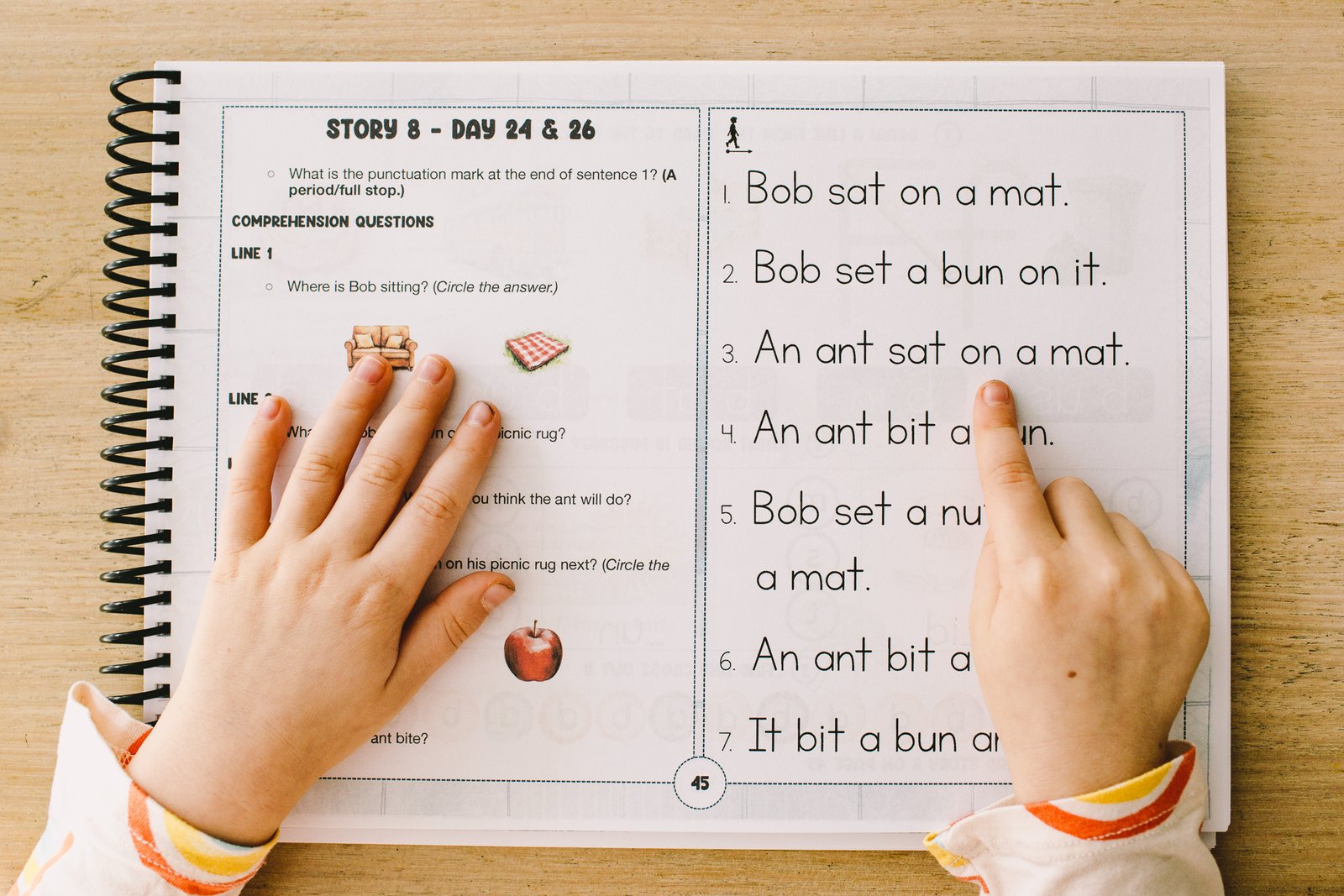
Each lesson is paired with a tightly controlled daily reader, with comprehension questions, so your child practises reading only what they’ve been taught.
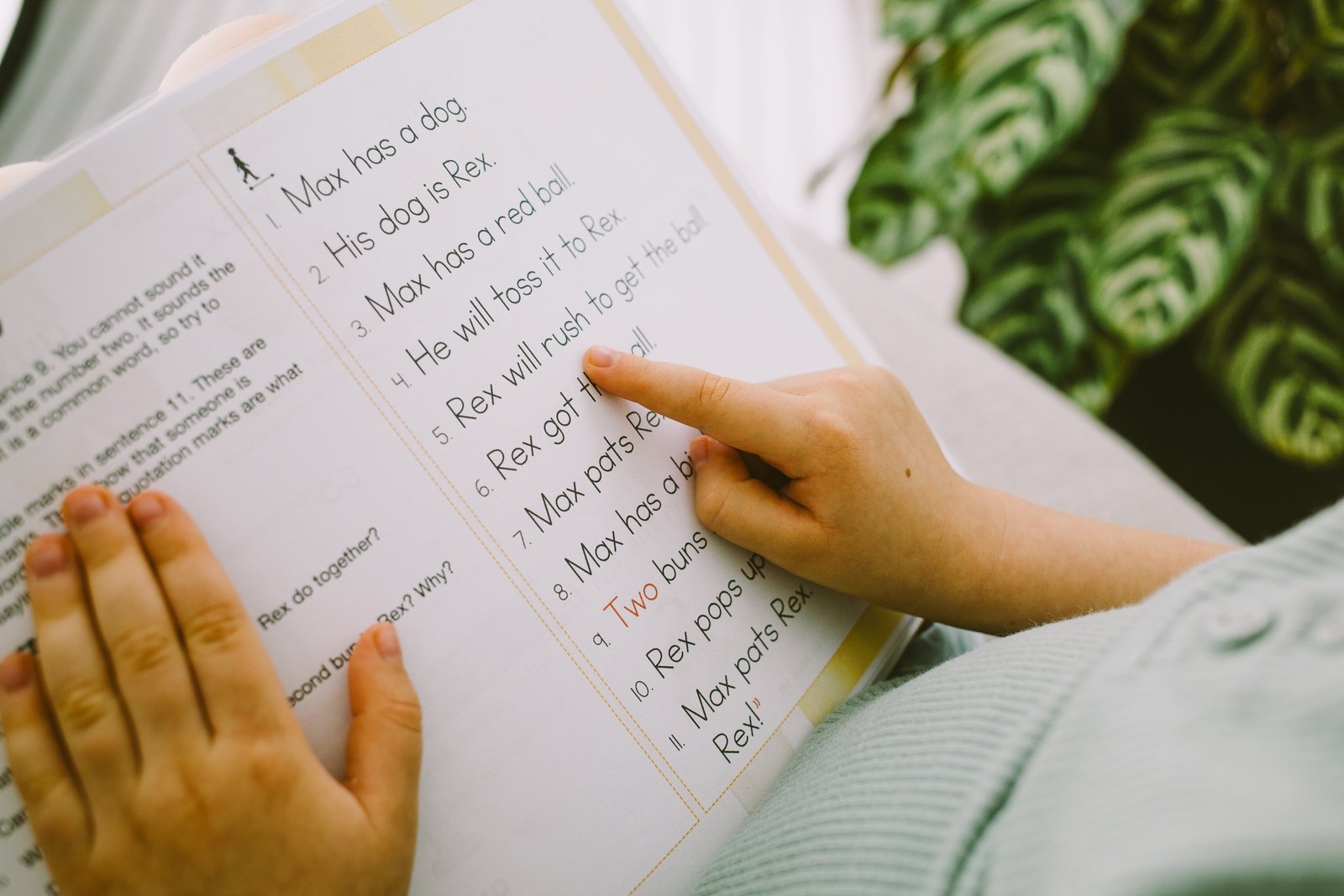
All the readers are intentionally image-free, so your child focuses on decoding words rather than guessing from pictures.
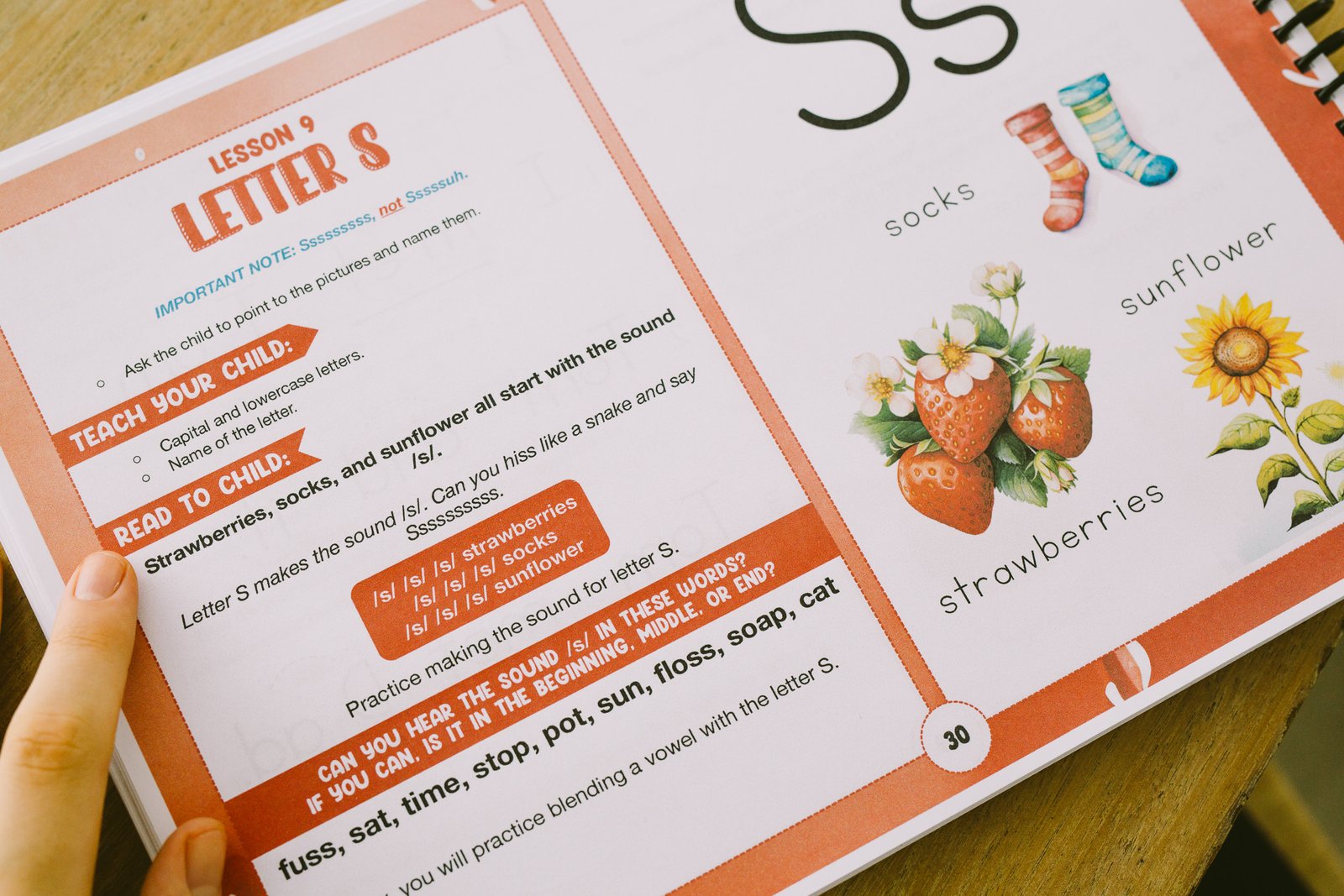
Reading is taught through decoding, not long sight-word lists. Only a small handful of non-decodable words are introduced in Stage One.
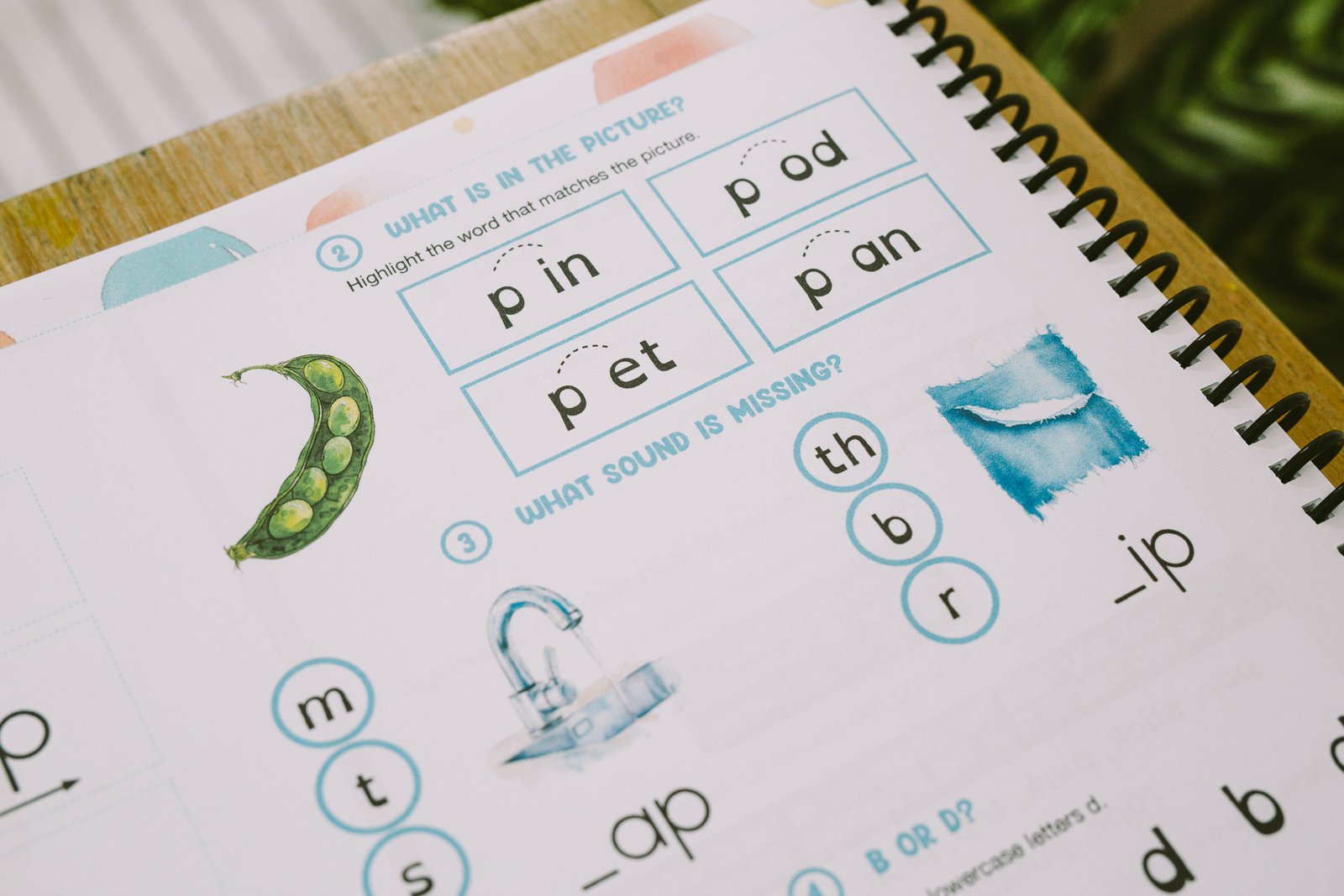
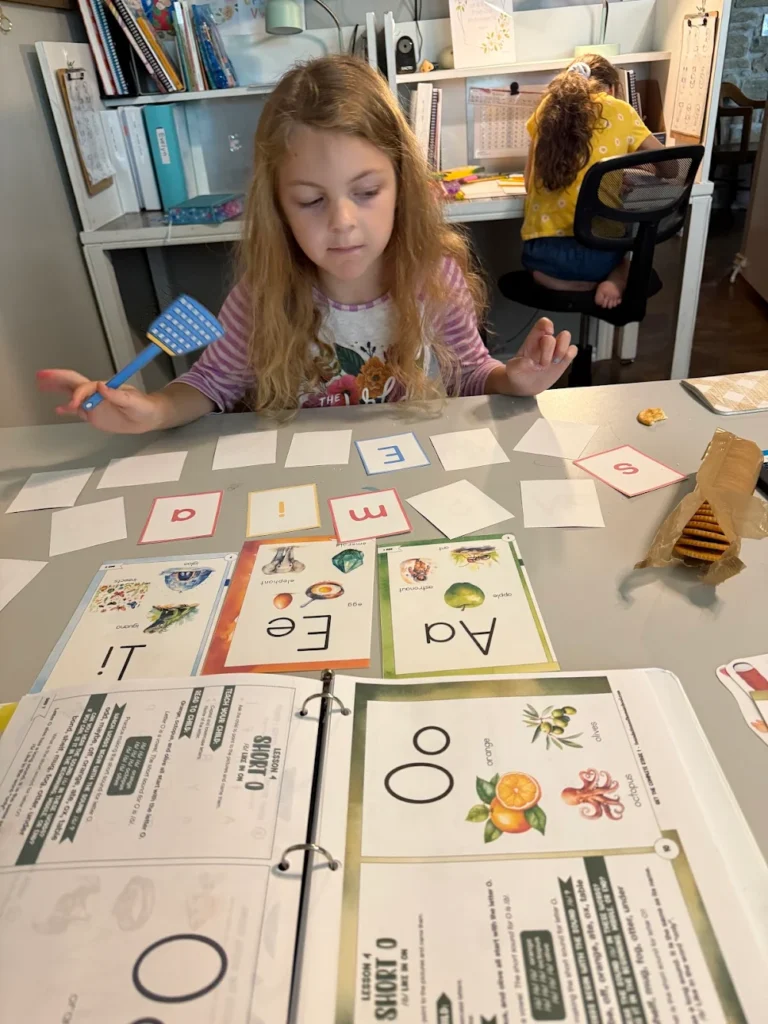
Lot’s of fun activities designed to reinforce each lesson and review previously taught concepts.
What your child will learn in Stage 1:
They will learn to blend sounds using a simple, and very effective methods that supports one of the most challenging parts of learning to read.
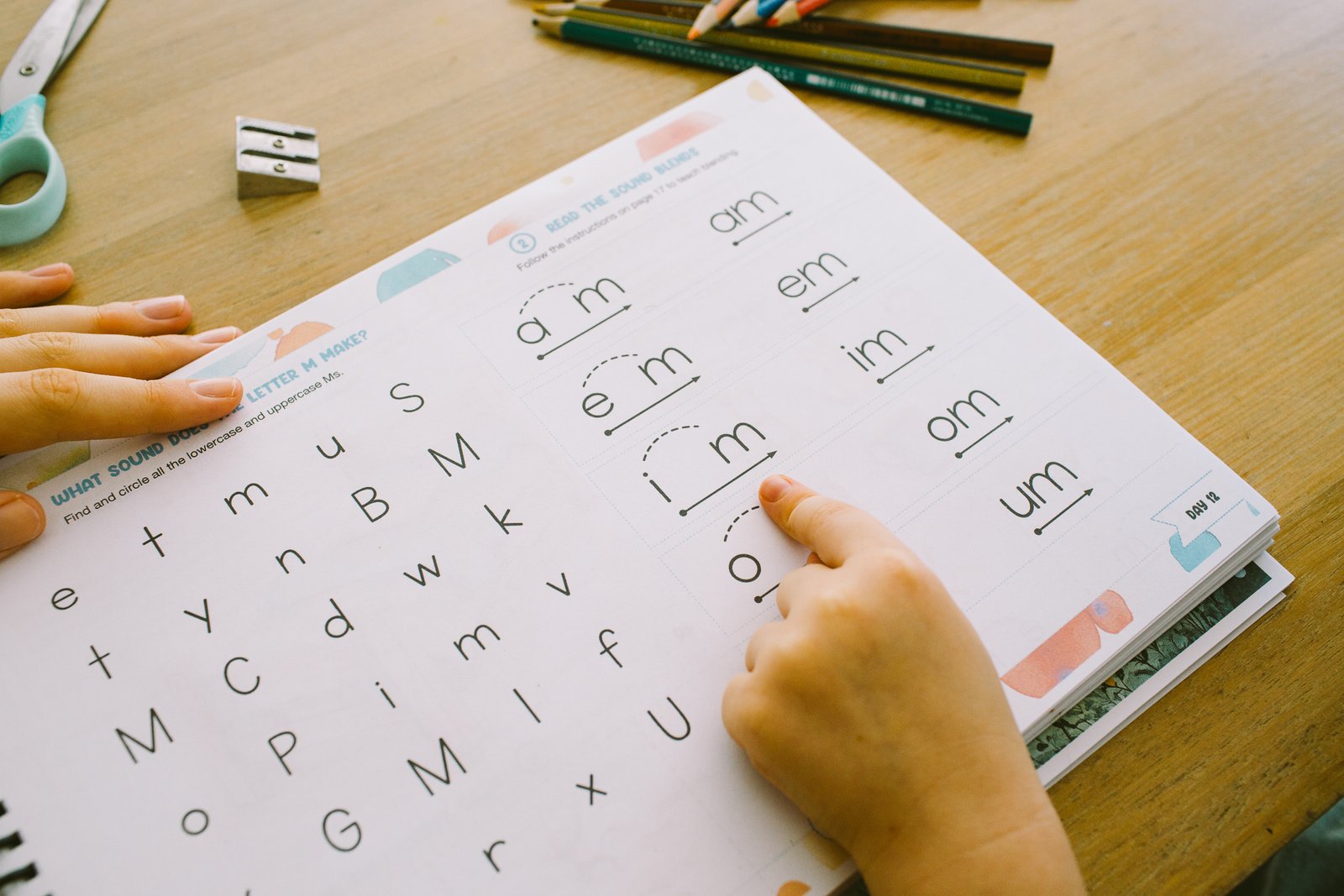
Your child will learn to decode short vowel, closed-syllable words (CVC words), using a carefully mapped sequence that covers the full alphabet while prioritising reading sentences from the very start.
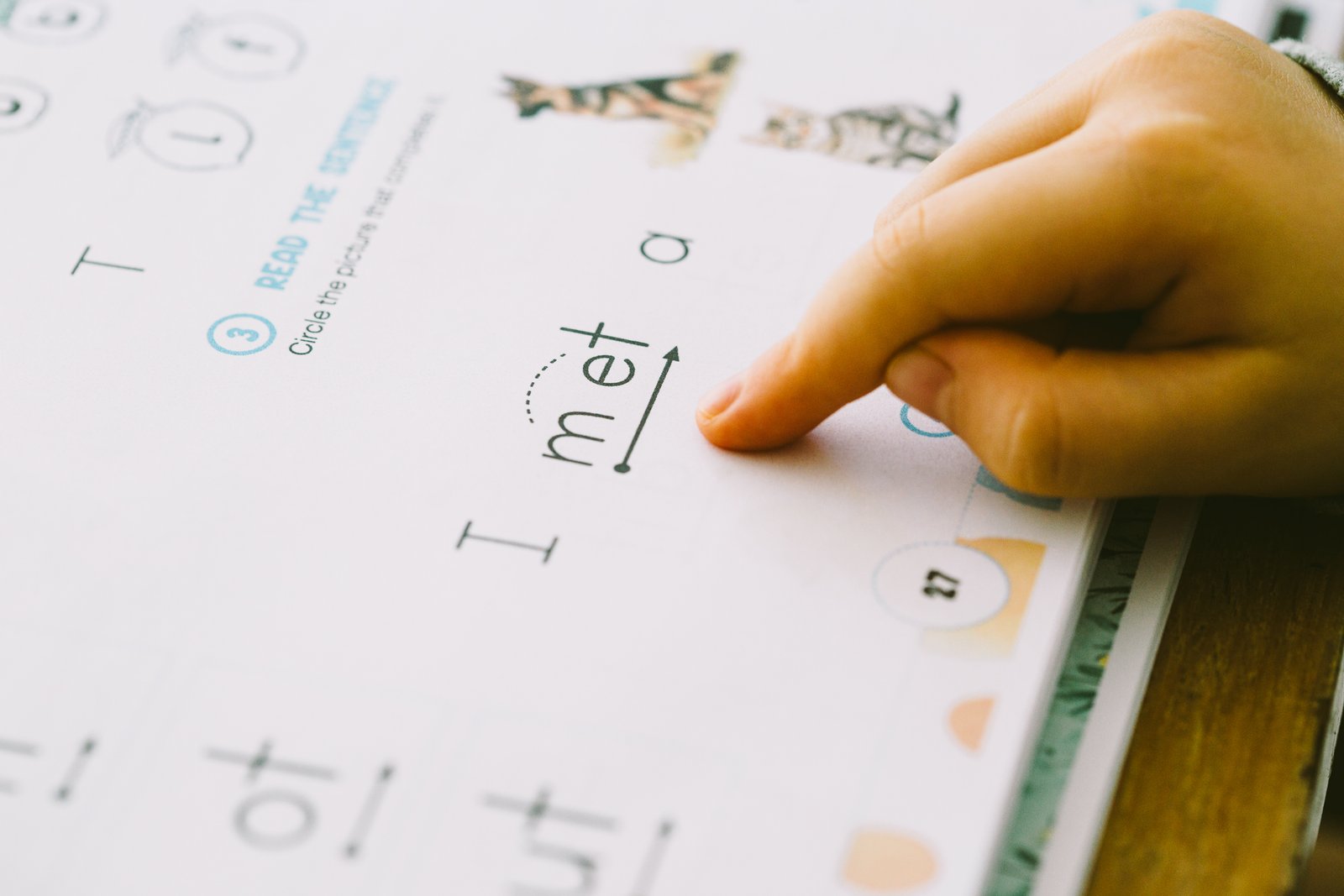
By the end of Stage One, your child will be able to competently read controlled passages with CVC, CVCC and CCVC words of up to 12 sentences with accuracy and understanding.
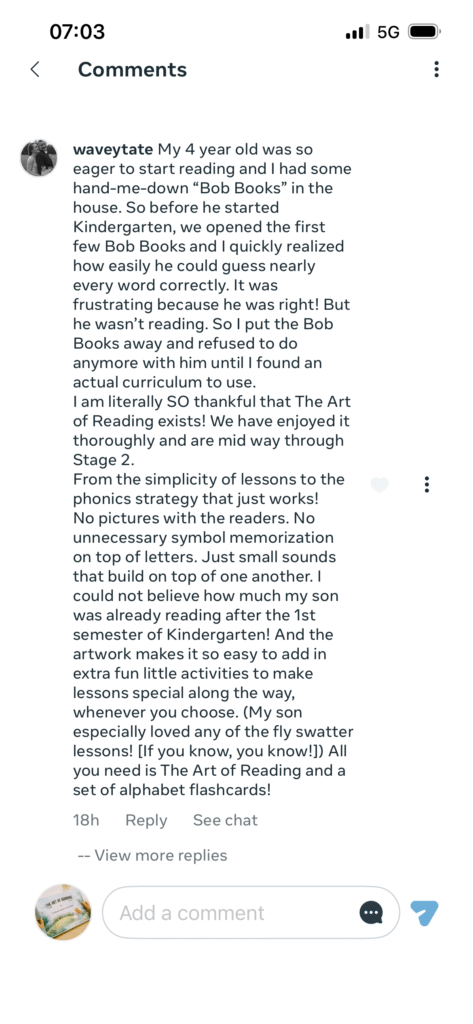
Why I made the Art of Reading
I wanted my youngest daughter to have the reading program I had been dreaming about for a long time, one that simply didn’t exist. So I made it, specially for her. I wanted her to enjoy learning to read, not just go through another boring phonics lesson from a book that looked like it was designed in 1984 and guaranteed moaning and tears.
But what I wanted even more was for the program to teach reading from a completely different angle, and to actually be fun.
I found that so many programs throw a kindergartener into the deep end, bombarding them with too many new concepts at once.
I wanted a program that introduced one concept at a time and gradually built on itself, with a clear stepping stone approach, so I could see progress in her reading ability. I wanted her to finish every lesson feeling like she had genuinely accomplished something. I never wanted her to be thrown into something she wasn’t ready for. I wanted her to feel proud of herself for actually reading independently.
And that different angle started with something most programs get fundamentally wrong.
In the early 1900s we shifted away from phonics-based instruction towards sight words. When phonics made its comeback, a lot of programs looked to Latin-based languages for methodology and borrowed their approach to early reading. The problem is that the vowel sounds we teach early readers are Saxon in origin, not Latin. Teaching children to blend using a Latin-based method makes reading significantly harder than it needs to be.
When you teach blending using CV blends like “ma” or “mi”, the vowel shifts. What should be a short vowel sound becomes aaaaaah, or the short i drifts toward a long e. The sound no longer matches the vowel in English, which creates a disconnect between what the child is trying to read and what they are pronouncing. I was very frustrated by that method of blending. It makes it so much harder for a five year old to master when the sound they are producing doesn’t actually match the way we pronounce words.
So I flipped it to a VC blend instead. My daughter didn’t have to struggle with blending because she got a short, crisp vowel sound followed by a consonant, like a-m. The vowel stayed accurate, so that the word being read actually sounded like a real word. With this method, even while she was still segmenting, she could hear the whole word clearly.
The next thing I wanted for my daughter was readers without pictures. The science is clear on this, pictures in early readers do not actually help a child read, yet the vast majority of phonics programs still use them. I had spent a huge amount of time covering those pictures with my other children because they could easily guess what was in the sentence from the image alone. Those early readers use such simple sentences like “The dog sat” with a picture next to the text, making it far too easy to guess rather than decode.
I was also frustrated by predictive sentence structures in so many readers out there.
Take sentences like: I can sit. I can hop. I can mix.
The first sentence might be decoded, but the rest are just parroted. From experience, a child picks up the pattern immediately and stops reading the words altogether after page two. That is not reading. I wanted my daughter to have truly decodable readers with varied sentences so that she had no choice but to actually read every single word on the page.
I wanted comprehension questions for every reader. Decoding is only part of reading. Comprehension told me whether my daughter actually understood what she had read, and whether she was engaging with the text beyond just sounding out the words.
I wanted my daughter reading sentences from the very start, not just practising sounds or random words on activity sheets. Fluency comes from reading text in passages, not from reading isolated words. The very first reader starts with a simple “I am” and gradually builds up to 12 sentences by the end of Stage 1. It was really important to me that she only ever read what she had been explicitly taught, as it gave her the time and space to master each new concept and review everything that came before it.
I also wanted lessons that were short and to the point. When you are homeschooling multiple children, time is not a luxury. I needed everything mapped out for me. I didn’t have time to come up with new activities every single day or hunt down supplementary materials. I wanted to open the book and teach, so I mapped everything out, every lesson, every activity, every reader, in one place and super easy to use.
And then there were the flashcard drills. One of my biggest frustrations. No five year old wants to sit through them, and honestly neither did I. I couldn’t imagine anything more boring and dreadful. All my kids hated them. So instead of drilling, I turned them into games.
What I ended up with was the program I had always wished existed. Something I could open every morning, follow the path, and watch my daughter grow into a confident reader, lesson by lesson, without any of the things that had frustrated me for years.
I personally know what it feels like to have a child who struggles to read. Every step forward can feel like three steps back. That hopelessness is something I never want another parent to experience. And that is also the reason why the program is written the way it is.
The program I was dreaming about didn’t exist. So I made it.
I want every parent to be equipped to teach their child to read, and for that process to be effective and actually fun. I made it for my daughter, and now it can be yours.
The ART OF READING
stage 2
The Art of Reading Stage 2 picks up seamlessly from where Stage 1 leaves off. It begins by introducing the most commonly used digraphs, helping your child unlock a wider range of words with ease.
Rather than relying on a long list of sight words, we prioritise teaching phonics concepts that appear frequently in English, so your child can decode independently with ease.
As their skills grow, you’ll notice blending becomes smoother and reading more fluent. Stage 2 continues to review and reinforce everything taught so far, while gradually introducing more complexity. The readers begin to feature richer, more humorous plots to keep your child engaged and motivated.
The ART OF READING
stage 3
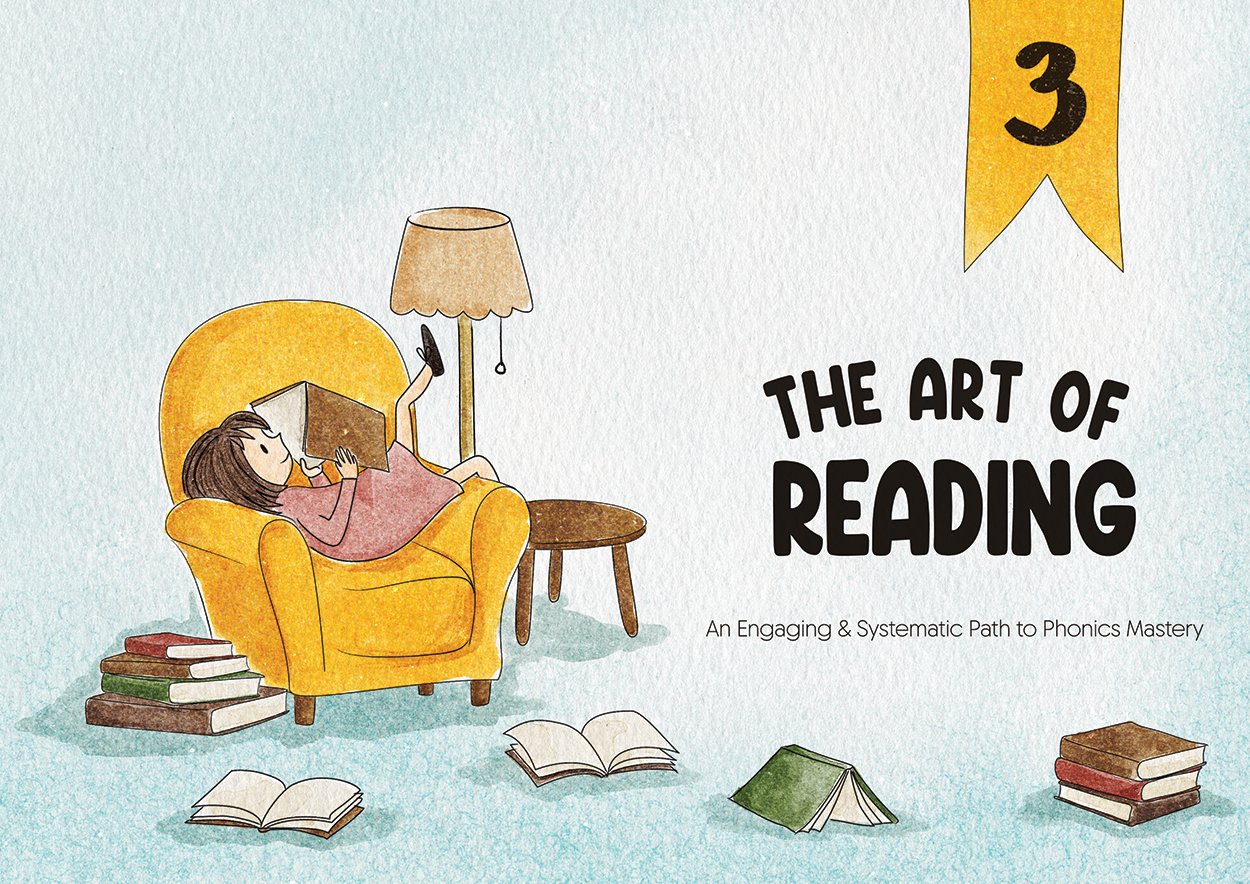
Stage 3 is the final stage of The Art of Reading and the one that brings everything together.
Over the course of Stage 3, your child will move from reading one-syllable words to decoding complex 3+ syllable words. Stage 3 completes the introduction of the remaining digraphs and introduces soft C and G, giving your child a fuller picture of how letters and letter combinations work together in English.
A major focus of Stage 3 is syllable division and the schwa. Your child will learn to break longer words into syllables, critically listen to the vowel sounds within each syllable, and apply previously learned phonics patterns to decode unfamiliar words with layered phonics concepts.
The approach to syllable division in this program is very different to other programs.
The conventional method has too many exceptions and contradictions, and for struggling readers that inconsistency creates an unnecessary barrier.
The Art of Reading teaches syllable division according to natural speech cadence, using a consistent set of rules that apply across all words. In modern English, we read by a hybrid of syllables and morphology, and Stage 3 equips your child with both. Together, these tools account for every word your child will encounter.
By the end of Stage 3, your child will be ready to leave controlled readers behind and read any book they choose.
Each lesson is short and focused, designed to take only 10-20 minutes a day.
Lessons introduce one concept at a time, then reinforce it through hands-on activities and fully decodable readers.
Each activity page and reader allows your child to apply what they’ve just learned, while also reviewing previously taught material.
The readers include inbuilt comprehension questions to support understanding.
Stage 3 also introduces morphology, replacing grammar activities with a systematic introduction to prefixes and suffixes, giving your child powerful tools for decoding and understanding longer words.
Stage 3 includes a gradual, inbuilt transition path from controlled readers to real books. By the end of the program your child will be reading real books independently.
Everything is laid out for you in one easy-to-use book, including parent instructions, activities, and readers, all you need to do is follow the path.